Ciara McCarthy
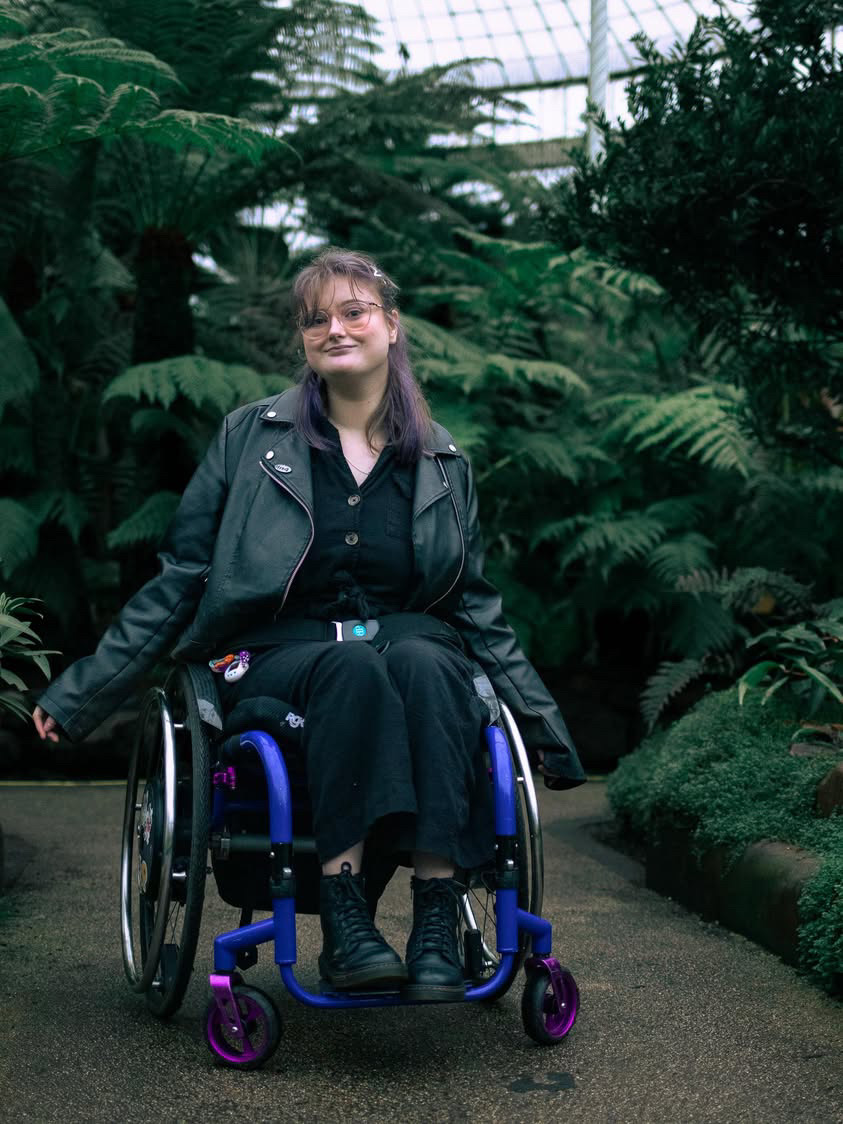
I can’t stand but I’ll stand for you!
If I’m elected, here’s what I’ll focus on:
- Making accessibility the university’s responsibility not ours. Disabled students shouldn’t have to fight for basic access.
- Sorting out the reporting process. If something’s inaccessible, it shouldn’t take ten emails and three follow-ups to get a response. I want a clearer, more transparent system that
actually works with a university that actually listens.
- Being in the rooms where decisions are made.
I’ll show up to meetings and make sure disabled students aren’t an afterthought on an agenda, we should be part of it from the start.
- Highlighting the reality of multiple and intersecting disabilities. Our experiences aren’t one-size-fits-all. I want to centre students who are Deaf, neurodivergent, chronically ill, multiply disabled and those who sit at the intersections of disability with race, gender, and sexuality. I want to centre students from a range of disabilities, and showcase the intersectionality that is also found between disability, race, gender, and sexuality.
- Working closely with GUDSS and the SRC. Disability shouldn’t sit in a corner. It should be embedded in campaigns, conversations, and change across the university.